
Well, this escalated quickly
There’s the now mostly avoided urban myth about how, if you place a frog in boiling water, the frog would instantly react and jump away to safety, but if you place it in cool water and slowly raise the temperature of the water, it’ll sit there and probably be ready for frog porridge.
It was a typical analogy for how permitting small concessions eventually leads to bigger concessions or success, depending on whether the analogy is used in business, marketing or when you’re mad, which is when you apply the “give someone an inch, and they’ll take a mile” variant. ’Was’ because many people believe boiling a frog as a metaphor is cruel, although many people do actually boil frogs for some tasty porridge, and are opting for a less steamy alternative, like that of the camel’s nose.
Service providers are champions at this; here’s some free cloud storage, upload all your photos, and then as soon as you get comfortable, boom, prices go up. Do you go through all the trouble of moving all your photos somewhere else that’s currently free (knowing they may also do the same thing in a few years) or just sit in the slowly warming water and try to enjoy the soak? Most of us choose to sit in the pot.
“Thank you for being a Premium subscriber. Starting on your billing date in May, your subscription price will change from £14.99/month to £16.99/month… You’ll continue to get the benefits that you know and love today, like ad-free music listening and downloading to listen offline.”
I’m sure I’d already started considering my options - it was definitely not the first time they’d done it in the past year, but there was no urgency. The recent email, though, made it clearer that this would continue infinitely. If I were going to jump off, it’d have to be now. Otherwise, it’d never be.
What are you adding? Nothing. Meanwhile, I can’t access song lyrics without paying extra. For a while, books were even included in the monthly payment. Unfortunately, this is not just a Spotify feature -almost every digital service provider does something similar with their subscriptions.
Self-host your things
Privacy wasn’t a priority initially, but it quickly became clear that it was a big deal with the solution (or at least for the people who went the same route) I had in mind: self-hosting my own services.
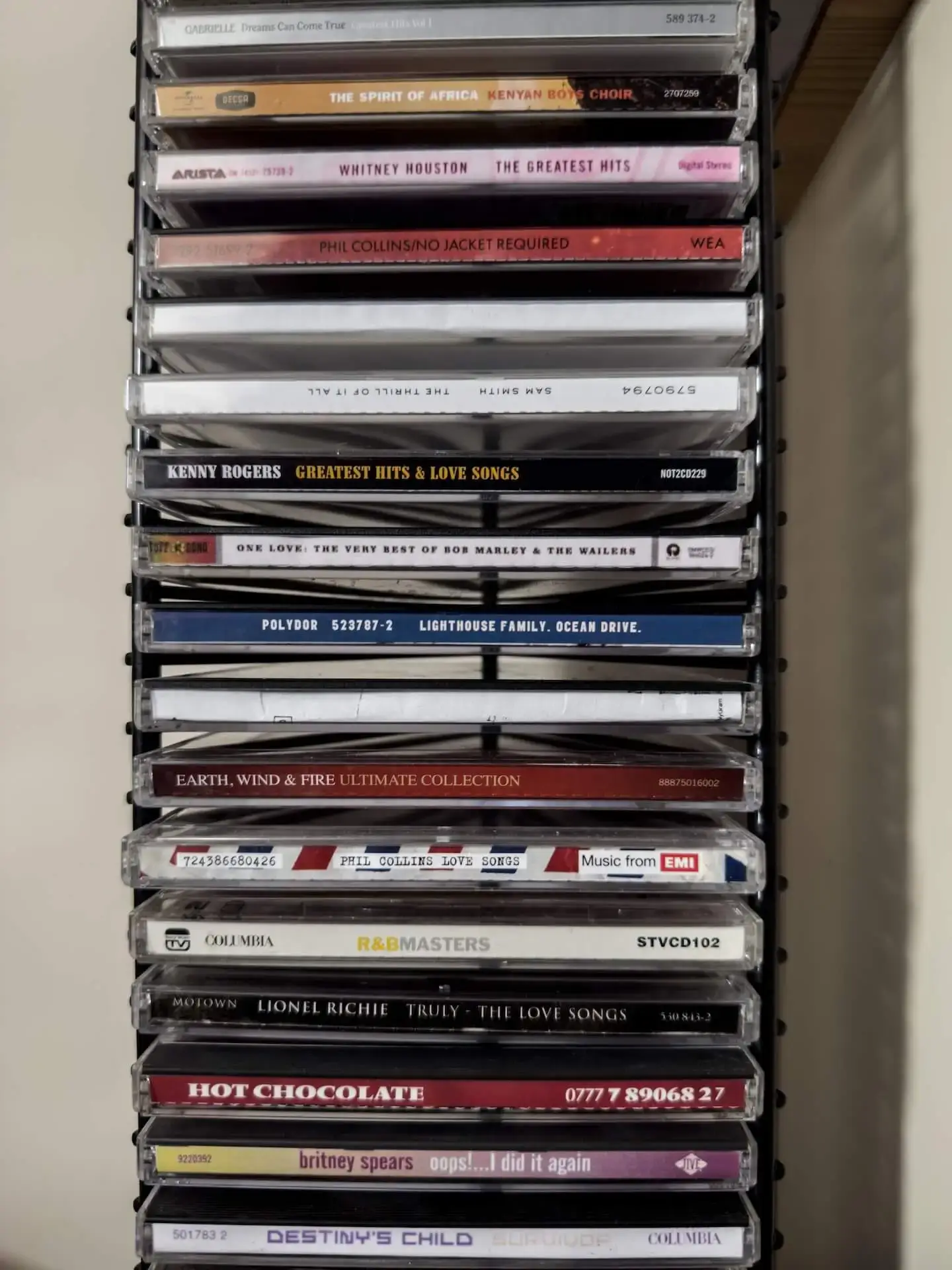
From the start, Spotify was the first on the chopping block. The arbitrary increase in prices, plus I’d gone back to compact discs - not the easiest to move around with compared with digital audio, but hosting my audio solves that problem.
This was one of those projects that started small and quickly grew larger than I thought. The initial idea was to use the old PC (a small-form-factor Intel i5 HP Compaq - remember Compaq? - Elite 8300) sitting doing nothing and probably just get a 1-2 TB HDD for storage and leave it. Nope.
That’s when I had the bright idea to replace Google Photos and Drive, too. I never had a Netflix subscription, but I also included a self-hosted option, plus services for document storage, a home assistant, web page bookmarks, etc. - all privacy-focused.
I ended up with a whole lot more than I planned for. After deciding not to proceed with the Compaq, the next best option was a small-form-factor mini-ITX box that would do everything/host all the services I had in mind.
- Pi-hole: network/home-wide ad blocker, etc.
- Audiobookshelf: name says it all
- Nextcloud: cloud replacement (GDrive, OneDrive, etc.)
- Immich: Google Photos replacement
- Paperless-ngx: dedicated document online filing cabinet
- Wallabag: Pocket/web bookmarks
- Navidrome: Spotify/Apple Music replacement (I ended up building my own client because everything available for Apple TV was either paid and/or crappy)
- Plex: movie streamer - never had any subscriptions (initially went with Jellyfin for all media, including audio, but all their client apps are severely lacking)
- Home Assistant: home/device smarts without Big Cloud
The primary/main hardware I ended up with:
- An Asrock Phantom Gaming B850I Lightning mini-ITX board (will probably go Intel if I had to do it again) paired with a Ryzen 7 7700 5.3GHz 8-Core 16-Thread CPU
- A 16GB SK Hynix 32GB DDR5-4800MHZ UDIMM Kit (this is when I understood how expensive building your own computer had got - these were like gold!)
- Two 8TB SATA Seagate Skyhawk AI drives (not sure what AI does in the drives but they were manufactured purposely for video camera feed storage, and I co-opted them so...)
- A primary boot solid state drive - 1TB Samsung 980 PRO
- A Corsair RM750 ATX PSU
- And I went the open-case route (for now, at least) with a generic case from Amazon for easier updating and cost savings.
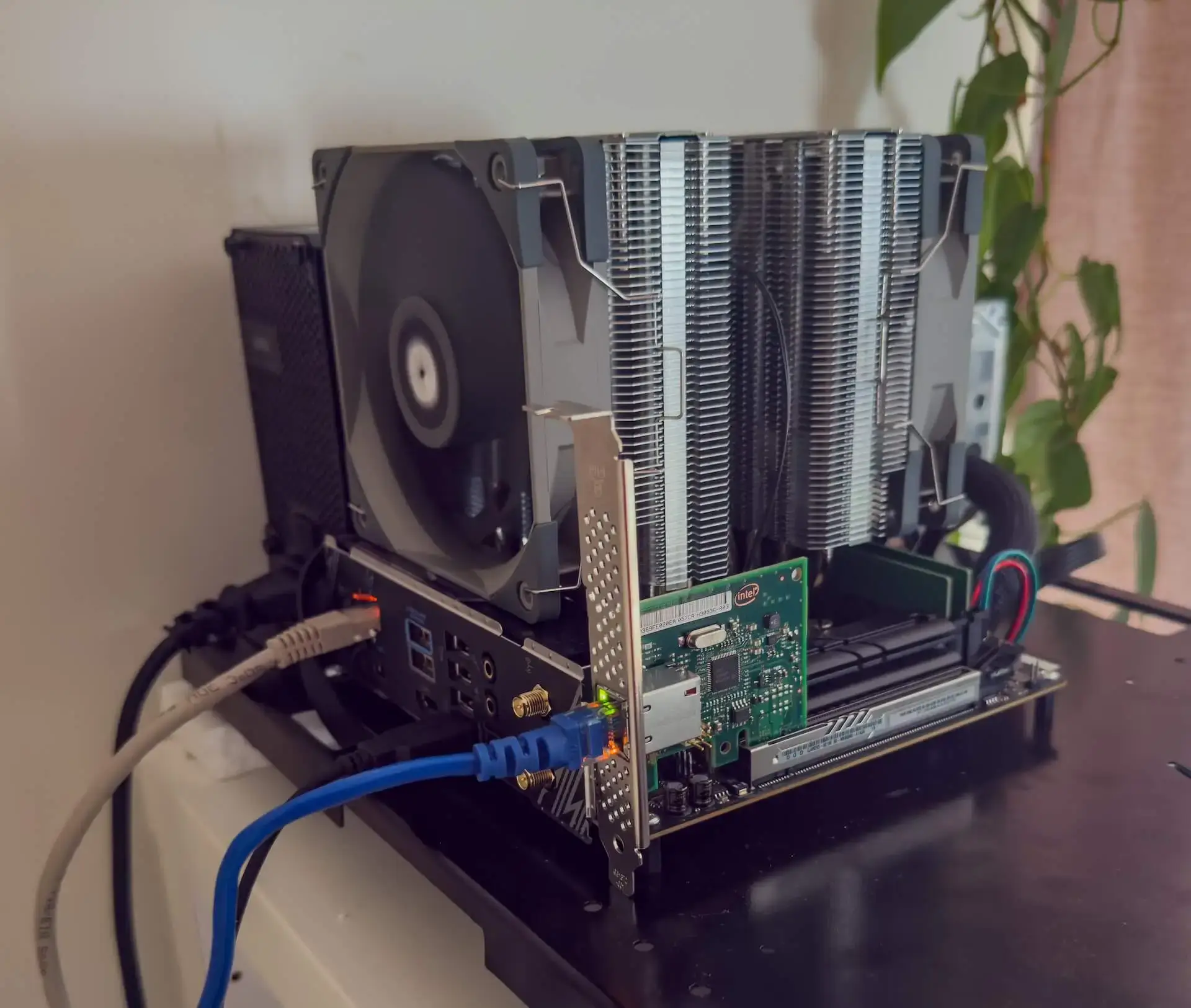
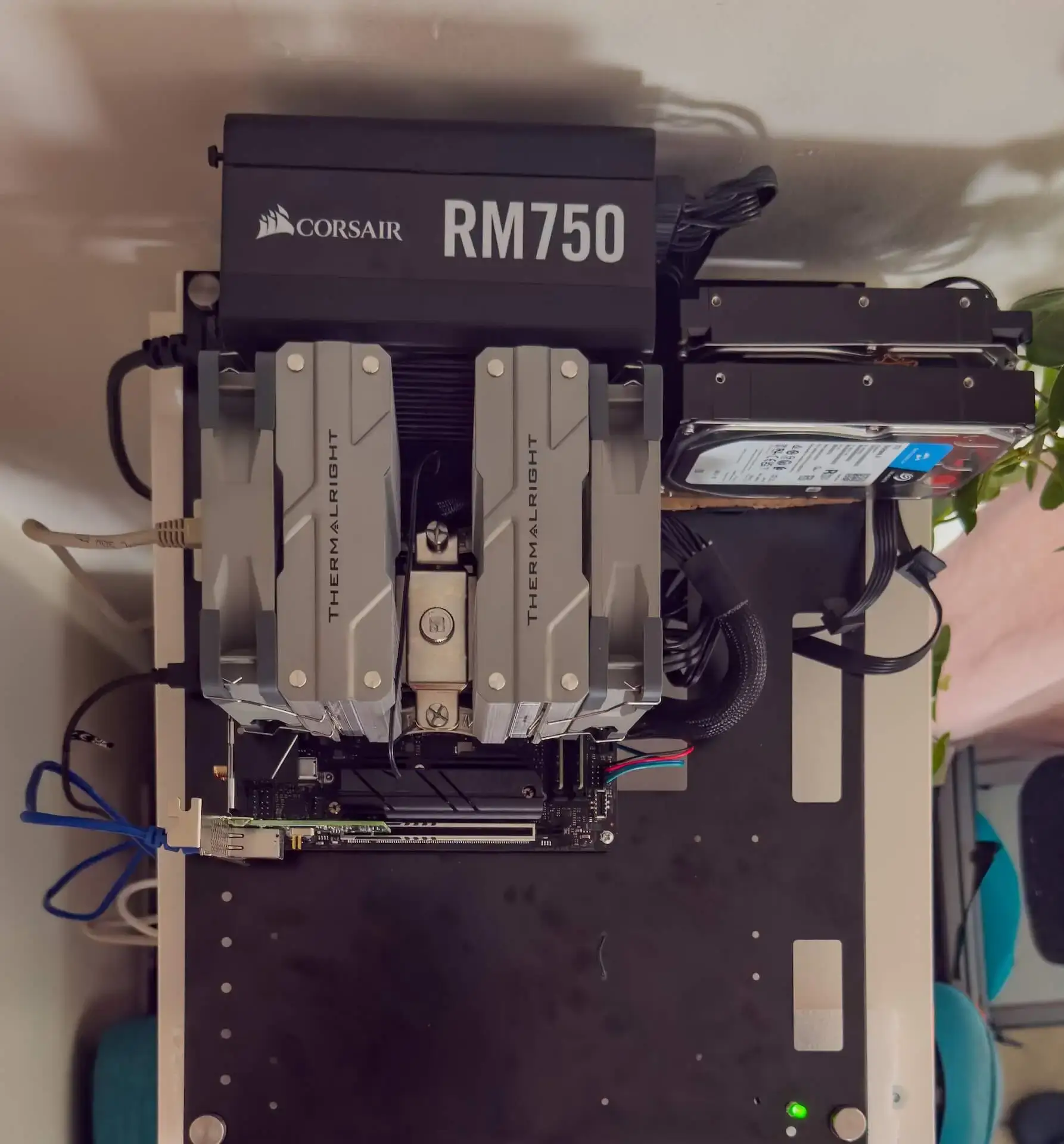
Did all the gear cost more than the combined annual Spotify and cloud storage subscriptions? Yes. Was the building and its ongoing configuration worth it? (Half-hearted) yeah. Would I do it again? Definitely, but probably with Intel, which generally has a lower power draw and lower effect on electricity costs, and surprisingly cost less than AMD. The last time I built a PC, it was the other way round - Intel was premium and AMD was for when you couldn't afford Intel - how the turns have tabled.
Anyways, the good and bad news is that this is not a build-it-and-leave project - it can be, if you want it to, with minimal updates - but to do what it has the potential to do, and especially at the current eye-watering prices of tech hardware, it needs to do everything it can possibly do and more.
Good and bad because I’ve slowly drifted into homelab territory without really meaning to, although it’s been fun so far - playing with and figuring out all the ways to configure Home Assistant as a replacement for Big Smart Assistants like Siri and Google Assistant. It does mean, however, that the tinkering will mostly continue, with at least service updates, if I don't want to lose all my photos and documents, etc. that I'm self-hosting - no pressure, though, I've got this.